Dual‑Probe Thermometers: The Ultimate Guide for Perfect Cooking
Dual-probe Thermometers: The Complete Guide
Getting the perfect temperature is crucial for both professional chefs and home cooks. Overcooked steak, undercooked chicken, or bread that’s too dense—these mistakes often come down to not knowing the real temperature inside your food. That’s where dual-probe thermometers come in. These smart tools give you real-time, accurate readings from two places at once. This guide explains everything you need to know about dual-probe thermometers, how they work, why they matter, and how to get the most from them in your kitchen or grill.
What Is A Dual-probe Thermometer?
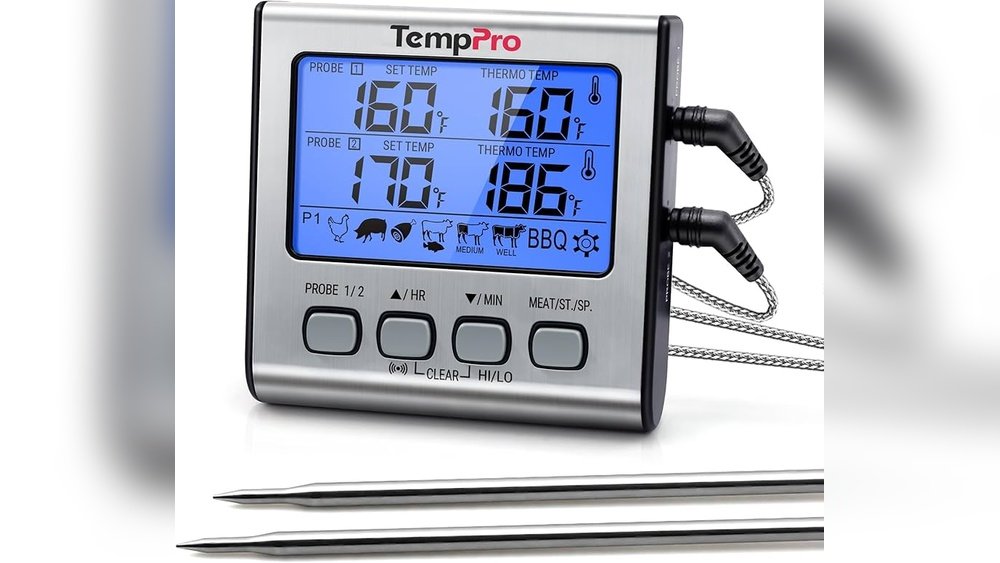
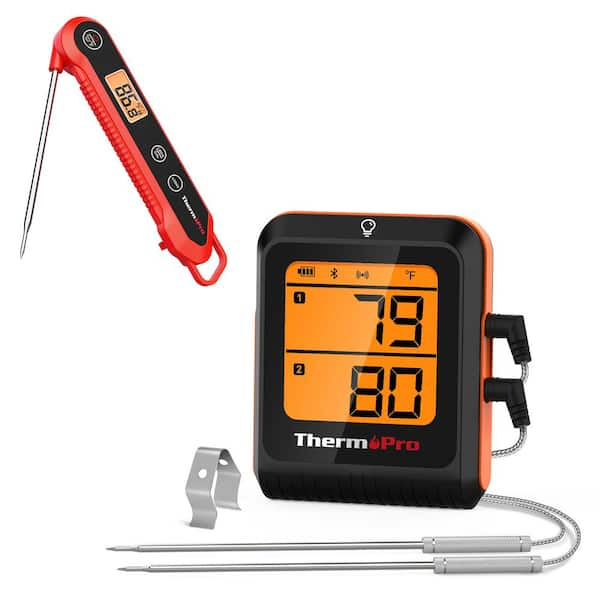
A dual-probe thermometer is a digital device with two separate probes. These probes can measure the temperature of two different foods, or two places in one piece of food, at the same time. Most models have a main unit with a screen, and two long metal probes attached by heat-resistant wires. Some newer models use wireless or Bluetooth technology.
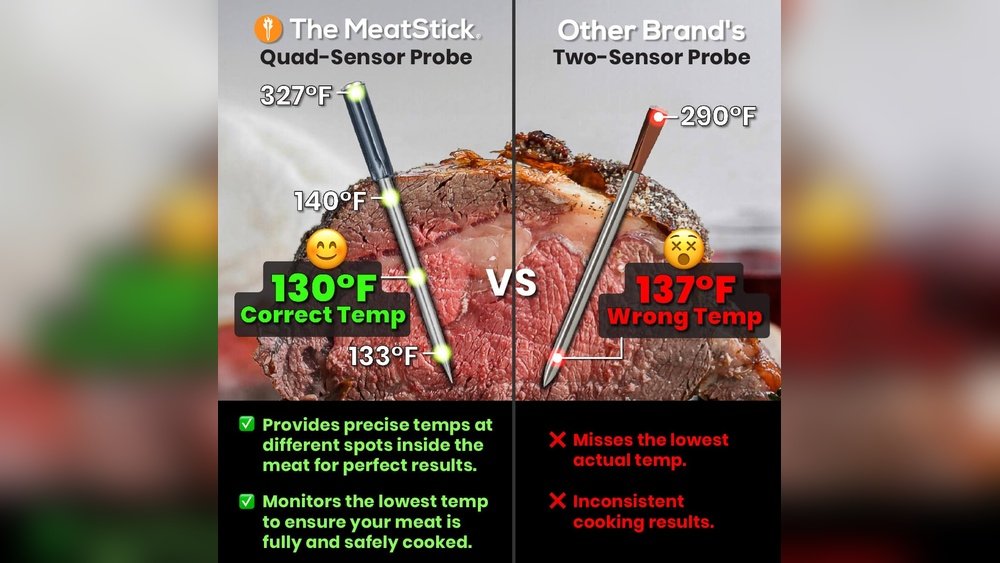
This design solves a big problem for cooks. With only one probe, you can measure one part of your meat or oven. But temperatures can be very different in different spots. For example, a roast might be 140°F in the middle but 170°F near the edge.
A dual-probe thermometer lets you track both areas at the same time. Or, you can check two different foods (like chicken and steak) as they cook.
Why Temperature Control Matters In Cooking
Getting food to the right temperature is more than just a detail—it’s key for both safety and taste.
- Food safety: Harmful bacteria are killed only at certain temperatures. For example, chicken must reach 165°F inside to be safe, while ground beef should hit at least 160°F.
- Perfect doneness: The difference between juicy and dry meat can be just a few degrees. With bread or pastries, oven temperature can change the texture completely.
- Consistency: If you cook for family or customers, you want the same great results every time. Accurate temperature is the secret.
One insight many beginners miss: the temperature inside food keeps rising for a few minutes after you remove it from heat (this is called carryover cooking). Dual-probe thermometers let you track this, so you can pull food out at the perfect moment.

Credit: thermcoproducts.com
How Dual-probe Thermometers Work
Most dual-probe thermometers use either thermocouple or thermistor technology. Both types sense heat at the probe tip and send electrical signals to the display unit, which shows the temperature.
Main Features
- Two Probes: Measure two places at once—either two foods or two parts of a large item.
- Digital Display: Shows both temperatures at the same time. Some models allow you to set alarms for each probe.
- Timer Functions: Many units include timers and countdowns for extra control.
- Wired or Wireless Probes: Some use cables (for oven use), others are fully wireless.
- Preset Programs: Some thermometers have presets for different meats and doneness levels.
Practical Example
Suppose you’re roasting a whole chicken. Insert one probe deep in the breast, and the other in the thigh. Both need to reach safe temperatures, but the thigh often cooks slower. With a dual-probe thermometer, you’ll know when both spots are perfect—no guessing, no raw poultry.
Types Of Dual-probe Thermometers
There are several types of dual-probe thermometers. Each has its strengths and ideal uses.
1. Wired Dual-probe Thermometers
These models have two wired probes attached to a main unit. They’re great for the oven, smoker, or grill, where you want to close the door or lid and still read the temperature from outside.
- Pros: Affordable, reliable, can handle high heat.
- Cons: Wires can tangle or get damaged if not handled carefully.
2. Wireless Dual-probe Thermometers
Wireless models send readings to a receiver or smartphone app. Some use Bluetooth, others use radio frequency.
- Pros: No cables, more freedom to move around. Great for BBQ and smoking.
- Cons: Batteries required, some models have limited range.
3. Instant-read Dual-probe Thermometers
These are less common but provide very fast readings. Usually, the probes are shorter, and these models are best for quick spot checks rather than leaving in the oven.
- Pros: Super fast, easy to use for checking several foods.
- Cons: Not designed for continuous monitoring during long cooks.
4. Smart Dual-probe Thermometers
These connect to apps and offer advanced features, like cooking guides, cloud tracking, and remote alarms.
- Pros: Lots of features, smart notifications, data history.
- Cons: More expensive, learning curve for apps.
Here’s a side-by-side comparison of the main types:
| Type | Best Use | Strengths | Weaknesses |
|---|---|---|---|
| Wired | Oven, smoker, grill | Reliable, heat-resistant, affordable | Wires can tangle |
| Wireless | BBQ, outdoor cooking | Freedom to move, remote monitoring | Battery life, range limits |
| Instant-Read | Quick spot checks | Very fast, portable | Not for continuous use |
| Smart | Connected kitchens | Advanced features, app support | Higher cost, complexity |
Key Features To Look For
Choosing a dual-probe thermometer isn’t just about price or looks. Consider these important features:
- Temperature Range: Make sure the thermometer and probes can handle the highest temperatures you’ll use (like 500°F for grilling).
- Probe Material: Stainless steel is best for durability and food safety.
- Cable Length: Longer cables (3–6 feet) give you more flexibility, especially for smokers or deep ovens.
- Accuracy: Look for models accurate within ±1–2°F. Even small errors can ruin delicate foods.
- Ease of Use: Large displays, simple buttons, and clear alerts make life easier.
- Water Resistance: Some units are splash-proof or waterproof—helpful for outdoor cooking.
- Alarms and Timers: Custom alarms warn you before food overcooks.
- Mounting Options: Magnetic backs, stands, or hooks let you place the main unit where you want.
- Power Source: Battery life matters, especially for wireless models.
An insight many buyers miss: the probe’s cable is often the weak spot. Look for high-heat, braided cables (not just plastic). Cheap cables can melt or short-circuit at high grill temps.
Popular Brands And Models
Several brands are known for quality dual-probe thermometers. Here are some of the most popular:
1. Thermoworks
ThermoWorks is famous for the ThermoPop and Smoke series. Their dual-probe models are highly accurate and built for professional kitchens.
2. Inkbird
Inkbird offers affordable, feature-rich wireless models, often with Bluetooth connectivity and app support.
3. Weber
Weber, a top grilling brand, makes durable wireless dual-probe thermometers designed for outdoor cooks.
4. Maverick
Maverick specializes in BBQ and smoker thermometers with long-range wireless options and rugged probes.
5. Meater
MEATER stands out with its fully wireless, app-connected probes. These are sleek and easy to use but come at a higher price.
Here’s a quick look at how some top models compare:
| Brand/Model | Type | Connectivity | Max Temp | Special Features |
|---|---|---|---|---|
| ThermoWorks Smoke X2 | Wired | Radio Frequency | 572°F | Long range, rugged build |
| Inkbird IBT-4XS | Wireless | Bluetooth | 572°F | App support, four probes |
| Weber iGrill 2 | Wireless | Bluetooth | 716°F | Multiple probe slots, magnetic base |
| Maverick ET-733 | Wireless | Radio Frequency | 572°F | Dual probe, long range |
| MEATER Plus | Smart Wireless | Bluetooth | 527°F | Fully wireless, guided cooking |
Credit: www.homedepot.com
How To Use A Dual-probe Thermometer
Using a dual-probe thermometer is simple, but a few tips make a big difference.
Step-by-step Guide
- Insert the Probes: Place the first probe in the thickest part of your main food (like the center of a roast). Insert the second probe into another area, or a different food item.
- Connect to Main Unit: Attach the probes to the thermometer’s base or turn on the wireless receiver.
- Set Target Temperatures: Most devices let you set alarm points for each probe (for example, 135°F for medium-rare steak).
- Monitor Progress: Watch the display. Some models show the current temperature and the target side by side.
- Listen for Alarms: When your set temperature is reached, the unit will beep or send a notification.
- Account for Carryover: Remove meat from heat a few degrees before your target—temperature rises a bit more as it rests.
Practical Tips
- Insert probes horizontally into meat for better accuracy, especially with steaks or thin cuts.
- Clean probes with hot, soapy water after each use. Avoid getting the cable wet.
- For bread or cake, insert the probe quickly and avoid touching the pan.
- Avoid pushing the probe all the way through the food, which can lead to false readings.
Beginners often forget: the probe tip (not the full metal shaft) is the part that senses temperature. Place the tip in the center of the thickest part for best results.
Common Mistakes And How To Avoid Them
Even experienced cooks make errors with dual-probe thermometers. Here are some common mistakes and how you can avoid them:
- Placing the probe too close to bone or fat: Bones conduct heat differently and can give a false high reading. Always insert into the thickest meat, away from bone or large pockets of fat.
- Not calibrating the thermometer: Over time, even digital thermometers can drift. Test your probes in ice water (should read 32°F) and boiling water (should read 212°F at sea level) a few times per year.
- Letting cables touch grill grates or flames: This can melt or short-circuit the wire. Route cables away from direct heat.
- Forgetting to check battery life: A dead battery mid-cook can ruin your meal. Keep spares handy.
- Using the wrong temperature presets: Many thermometers have USDA presets, but these are often for well-done. Adjust to your preferred doneness if you like medium-rare or rare steak.
Dual-probe Thermometers Vs. Single-probe And Infrared Thermometers
Is a dual-probe thermometer really better? Let’s compare.
Dual-probe Vs. Single-probe
- Coverage: Dual probes can monitor two foods or two areas at once. Single-probe units only check one.
- Efficiency: For large roasts or multi-item grilling, dual probes save time and improve accuracy.
- Complexity: Dual-probe units are a bit more complex to set up, but the benefit is worth it for most cooks.
Dual-probe Vs. Infrared Thermometers
Infrared thermometers measure surface temperature only—they don’t check inside the food. Dual-probe thermometers measure internal temperature, which is what matters for doneness and safety.
Here’s a quick comparison:
| Feature | Dual-Probe | Single-Probe | Infrared |
|---|---|---|---|
| Internal Temp | Yes (2 places) | Yes (1 place) | No |
| Surface Temp | No | No | Yes |
| Use with Oven | Yes | Yes | No |
| Multi-Food Monitoring | Yes | No | No |
| Real-Time Alerts | Yes | Sometimes | No |
| Price | Moderate | Low-Moderate | Low-Moderate |
Cleaning And Caring For Your Dual-probe Thermometer
Taking care of your thermometer helps it last longer and keeps your food safe.
Cleaning
- Wipe probes with a damp cloth or soapy sponge after every use.
- Don’t immerse the probe cables or digital unit in water.
- Disinfect the probe tip with alcohol wipes, especially after raw meat.
Storage
- Coil cables loosely—don’t bend sharply.
- Keep the main unit dry and away from heat.
- Store in a clean, dry drawer or hang on a hook (many units come with magnets or stands).
Maintenance
- Replace batteries as soon as the display fades.
- Check accuracy every few months using ice/boiling water tests.
- Inspect probes and cables for cracks or wear.
A practical tip: keep a second set of replacement probes. Probes can wear out faster than the main unit, and waiting for a replacement during a big cook can be stressful.

Credit: www.fluke.com
Advanced Uses For Dual-probe Thermometers
Dual-probe thermometers are not just for meat. Here are some creative uses:
- Baking Bread: Track the inside temp of two loaves or two spots in a big loaf. Bread is done at 190–210°F inside.
- Making Candy: Use one probe for the sugar syrup, another for chocolate (just check max temp rating).
- Fermentation: Monitor the temperature of two fermenting vessels at once—useful for yogurt, cheese, or beer.
- Sous Vide Cooking: Place one probe in the water bath, the other in the food pouch, to ensure even cooking.
- Refrigerator/Freezer Monitoring: Leave probes in different spots to check for cold spots or uneven chilling.
Most people don’t realize: dual probes can help diagnose oven hot spots. Place one probe at the front, one at the back, and compare readings to find uneven heating.
Buying Advice: How To Choose The Right Model
There are dozens of dual-probe thermometers on the market. Here’s how to find the right one for your needs.
1. Decide Where You’ll Use It
- Indoor Only: Wired models are fine.
- Outdoor/BBQ: Choose wireless or water-resistant models.
- Connected Kitchen: Smart thermometers with app support make sense.
2. Check Probe And Cable Quality
- Look for stainless steel probes and braided cables.
- Check the max temperature (at least 500°F for grilling).
3. Look For Useful Extras
- Backlit displays: Helpful for night cooks.
- Multiple alarms: Key if you cook several items at once.
- Magnetic or stand base: Makes it easier to position the unit.
4. Read Reviews And Warranties
- Stick with trusted brands with good customer support.
- Check for at least a 1-year warranty.
5. Set A Realistic Budget
- Quality models start around $30–$60.
- High-end smart models can cost $100 or more.
Avoid a common beginner mistake: don’t choose the cheapest model. Saving $10 often means losing out on accuracy, durability, or features you’ll wish you had later.
For more detailed product comparisons, the Serious Eats thermometer buying guide is a trusted resource.
Safety Tips
- Never leave probes in the grill or oven when using the self-clean cycle (temps can exceed max ratings).
- Always remove batteries if storing the thermometer for a long time.
- Wash hands after handling raw food and before touching the thermometer unit.
The Future Of Dual-probe Thermometers
As technology improves, dual-probe thermometers are becoming smarter, smaller, and more connected. Expect to see:
- Longer battery life: Thanks to better power management.
- Cloud connectivity: Save and analyze your cooking data.
- More robust wireless range: Outdoor cooks can monitor from anywhere in the house.
- Voice assistant integration: Get temperature updates through Alexa or Google Assistant.
One insight: as food safety regulations get stricter in restaurants, expect dual-probe (or even multi-probe) thermometers to become standard equipment.
Frequently Asked Questions
What’s The Difference Between A Dual-probe And A Single-probe Thermometer?
A dual-probe thermometer has two probes, letting you monitor two foods or two spots at once. A single-probe thermometer checks only one area. Dual-probe models are more versatile, especially for large meals or multi-item cooking.
Can I Leave The Probes In The Food While It Cooks?
Yes. Most dual-probe thermometers are designed to be left in meat or other foods during cooking. Always check the manufacturer’s specs, but most probes are oven-safe up to 500–700°F. Avoid letting cables touch flames or heating elements.
How Do I Know If My Thermometer Is Accurate?
Test it in ice water (should read 32°F) and boiling water (should read 212°F at sea level). If it’s off by more than 1–2°F, check the manual for calibration instructions, or consider replacing the probes.
Are Dual-probe Thermometers Dishwasher Safe?
No. The probes can be washed by hand, but the cables and digital unit should never be placed in a dishwasher or submerged in water. Wipe clean with a damp cloth.
What’s The Best Way To Insert The Probes For Accurate Readings?
Insert the probe tip into the thickest part of the meat, away from bone and fat. For even cooking, insert horizontally into the center. Make sure the probe tip is fully inside the food, not sticking out.
Dual-probe thermometers offer powerful advantages for anyone serious about cooking. With the right model and good habits, you’ll get safer, tastier, and more consistent results—every time you cook.