Smoking Times: The Ultimate Guide to Perfect BBQ Results
Smoking Times: Unlocking Flavor And Mastery
Smoking food is more than just cooking. It’s a craft that mixes patience, heat, wood, and time. The right smoking time can turn tough meat into juicy, tender bites. But if you rush, you lose flavor and texture. If you wait too long, your food dries out or tastes bitter. Knowing how long to smoke different foods is key for every pitmaster, home cook, and food lover.
Many beginners think smoking is only about temperature or wood choice. But smoking times are just as important. They decide how your brisket, ribs, fish, or vegetables taste and feel. If you want to impress your friends, family, or guests, you need to master the art of timing. This guide will help you understand, plan, and control smoking times for many foods. You’ll learn how timing affects flavor, texture, safety, and enjoyment.
We’ll cover the basics, give real examples, compare common foods, and offer expert tips. No matter if you have a big smoker or a small grill, you’ll find answers and advice here. Let’s unlock the secrets behind smoking times and help you cook like a pro.
—
What Are Smoking Times?
Smoking times are simply the duration you cook food in smoke. It depends on what you smoke, how thick it is, the temperature, and the wood type. Some foods need hours; others only need minutes.
Smoking is not fast cooking. It’s slow and gentle. The smoke gives flavor, and the heat slowly cooks the food. Smoking times are important for:
- Flavor development: More time means deeper, richer taste.
- Tenderness: Long smoking breaks down tough fibers.
- Food safety: Right time ensures meat is fully cooked.
How Smoking Times Are Decided
Smoking times are not random. They follow rules based on:
- Type of food: Beef, pork, chicken, fish, cheese, veggies.
- Weight and thickness: Thicker pieces need longer.
- Smoking temperature: Low heat (180–250°F) is common.
- Desired doneness: Rare, medium, or well done.
- Personal taste: Some like stronger smoke flavor.
For example, brisket needs 10–14 hours at low heat. Salmon fillets may need only 1–2 hours. Cheese can be smoked in 30–60 minutes.
—
The Science Behind Smoking Times
Smoking changes food in special ways. The smoke particles stick to the surface and seep inside. The heat melts fat and breaks down proteins. Time lets these changes happen slowly.
Key Factors
- Collagen breakdown: In meat, collagen turns to gelatin after hours of low heat. This makes meat soft.
- Smoke penetration: Smoke enters food over time, but after a point, it stops going deeper. That’s why longer doesn’t always mean better.
- Moisture loss: Too much time dries food. You must balance smoking time and moisture.
Example: Brisket
A brisket is tough at first. It has lots of collagen. Smoking at 225°F for 12 hours turns it into soft, juicy slices. If you stop at 4 hours, it’s chewy. If you smoke for 18 hours, it’s dry.
—
Smoking Times For Popular Foods
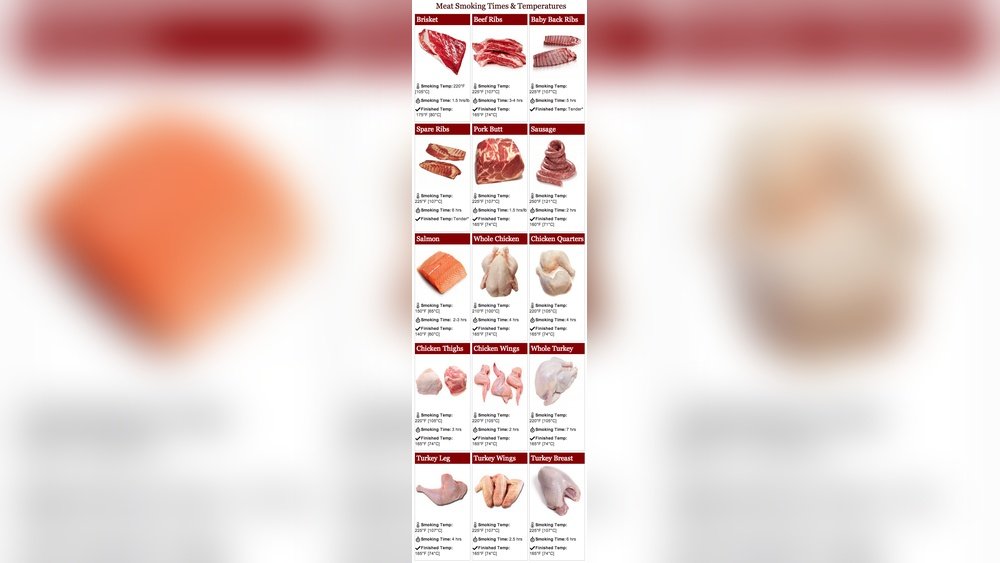
Let’s break down recommended smoking times for common foods. These are guidelines; always check doneness with a thermometer.

Beef
- Brisket: 10–14 hours at 225°F (internal temp: 195–205°F)
- Ribs: 5–7 hours at 225°F (internal temp: 190–203°F)
- Beef short ribs: 6–8 hours at 225°F
- Prime rib: 3–5 hours at 225°F (internal temp: 130–140°F)
- Chuck roast: 6–8 hours at 225°F
Pork
- Pork shoulder (butt): 10–12 hours at 225°F (internal temp: 195–205°F)
- Baby back ribs: 4–6 hours at 225°F
- Pork loin: 2–3 hours at 225°F (internal temp: 145°F)
- Pork belly: 4–6 hours at 225°F
Poultry
- Whole chicken: 3–5 hours at 225°F (internal temp: 165°F)
- Chicken wings: 1.5–2 hours at 225°F
- Turkey breast: 2.5–4 hours at 225°F (internal temp: 165°F)
- Whole turkey: 6–8 hours at 225°F
Fish
- Salmon fillets: 1–2 hours at 180–200°F
- Trout: 1–2 hours at 180–200°F
- Tilapia: 1–1.5 hours at 180–200°F
Other Foods
- Sausages: 2–3 hours at 225°F
- Cheese: 30–60 minutes at 90°F (cold smoke)
- Vegetables: 45–90 minutes at 225°F
—
Comparison: Smoking Times And Temperatures
Smoking times change with temperature. Here’s a simple comparison for common meats:
| Food | Low Temp (225°F) | Higher Temp (275°F) | Difference |
|---|---|---|---|
| Brisket | 12 hours | 8 hours | 4 hours faster, but less tender |
| Pork Shoulder | 11 hours | 7 hours | 4 hours faster, risk of dryness |
| Chicken | 4 hours | 2.5 hours | 1.5 hours faster, skin may burn |
| Ribs | 6 hours | 4 hours | 2 hours faster, less smoke flavor |
Higher temperature speeds up smoking, but can reduce tenderness and flavor. Slow smoking is best for tough cuts.
—
Smoking Times For Beginners
If you are new to smoking, start with easy foods and clear timing. Here are good starter choices:
- Chicken wings: Short smoking time, easy to check doneness.
- Salmon: Quick, doesn’t dry out fast.
- Sausages: Holds moisture, forgiving.
- Pork ribs: Medium time, great flavor.
Stick to recommended times and always use a thermometer. Don’t guess doneness by color.
Common Beginner Mistakes
- Smoking too long: Food gets dry and bitter.
- Smoking too short: Meat is tough or unsafe.
- Using wrong temperature: High heat ruins texture.
- Not checking internal temperature: Can be unsafe.
Two insights beginners often miss:
- Smoke flavor stops increasing after about 4–5 hours. More time only changes texture.
- Thin foods (like fish) absorb smoke fast; thick cuts need more time for tenderness, not flavor.
—

Credit: girlscangrill.com
Advanced Smoking Times And Techniques
Experienced smokers adjust times for extra results. Here are advanced ideas:
The “texas Crutch”
Wrap meat in foil after a few hours. This speeds up cooking and keeps moisture. For brisket, smoke 6 hours, then wrap and finish for 4–6 hours. This can cut total time without losing tenderness.
The Stall
Large cuts (like brisket) sometimes “stall” at 150–170°F internal temp. This can last hours. Wrapping meat or raising temperature helps pass the stall.
Layered Smoking
Smoke foods in stages. For example, smoke ribs for 3 hours, wrap with sauce, then smoke 2 more hours. Each stage has its own timing.
Cold Smoking
Cold smoking uses low temperature (under 90°F). Cheese, fish, or nuts can be smoked for short periods. Cold smoking times are always less than hot smoking.
—
How Smoking Times Affect Flavor And Texture
Smoking time is not just about doneness. It changes the taste, smell, and feel of food.
Flavor
- Short time: Light smoke, mild flavor.
- Long time: Deep, strong smoke taste.
- Too long: Bitter, unpleasant.
Texture
- Short time: Firm, sometimes tough.
- Long time: Tender, juicy.
- Too long: Dry, crumbly.
Example: Smoked salmon is soft after 90 minutes. If you smoke for 3 hours, it’s dry and hard.
Safety
Always check internal temperature. Smoking times are guides, not guarantees. Use a thermometer:
- Beef and pork: 195–205°F for soft texture
- Poultry: 165°F for safety
- Fish: 145°F
—
Smoking Times For Different Smokers
Not all smokers are the same. Some hold temperature better, some cook faster.
Types Of Smokers
- Offset smoker: Classic, uses wood logs. Steady heat, longer times.
- Electric smoker: Easy to control, sometimes faster.
- Pellet smoker: Uses wood pellets, steady temperature.
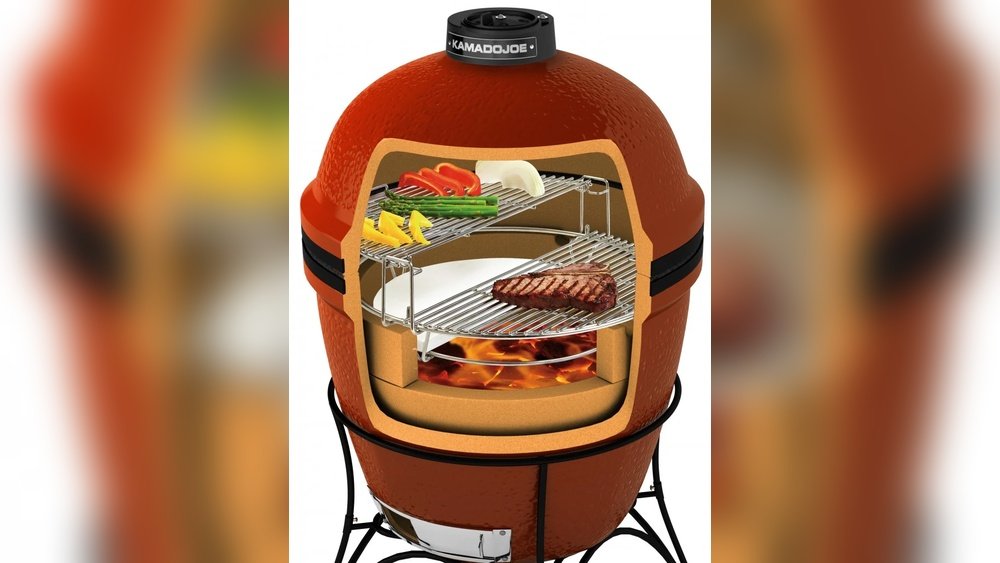
- Kamado grill: Ceramic, holds heat well.
Each type may change timing. Electric smokers are more consistent, but may lack strong smoke flavor. Offset smokers take longer but give deep taste.
| Smoker Type | Typical Smoking Time for Brisket | Flavor Strength |
|---|---|---|
| Offset Smoker | 12–14 hours | Strong |
| Electric Smoker | 10–12 hours | Mild |
| Pellet Smoker | 10–12 hours | Medium |
| Kamado Grill | 12–14 hours | Strong |
—
Smoking Times For Vegetables, Cheese, And Other Foods
Smoking is not just for meat. Many foods taste better with smoke.
Vegetables
- Bell peppers: 45–60 minutes at 225°F
- Corn: 60–90 minutes at 225°F
- Eggplant: 60–90 minutes at 225°F
Vegetables absorb smoke quickly. Don’t over-smoke or they will lose texture.
Cheese
- Cheddar, gouda, mozzarella: 30–60 minutes at 90°F (cold smoke)
Cheese melts at high heat. Cold smoke gives flavor without melting.
Nuts And Other Snacks
- Almonds, walnuts: 60–90 minutes at 90°F
- Hard-boiled eggs: 30–45 minutes at 225°F
Short times are best. Longer can make snacks bitter.

—
Smoking Times For Different Wood Types
Wood choice changes smoking time and flavor. Some woods are strong, others are mild.
Strong Woods
- Hickory: Use for beef and pork, long smoking times.
- Mesquite: Very strong, use for short times or mix with other woods.
Mild Woods
- Apple: Great for poultry and fish, can be used for longer times.
- Cherry: Adds sweet flavor, good for pork and chicken.
How Wood Affects Timing
- Strong woods need less time for flavor.
- Mild woods can be smoked longer without bitterness.
Example: For salmon, use apple wood for 2 hours. If using hickory, smoke for only 1 hour.
—
Planning Smoking Times For Meals
Timing is important for big meals or parties. You must plan ahead.
Steps For Planning
- Choose recipes: Check recommended smoking times.
- Prepare food: Trim, marinate, or season before smoking.
- Preheat smoker: Give it time to reach temperature.
- Start early: Add buffer time for stalls or delays.
- Monitor temperature: Use a thermometer for both smoker and food.
- Rest food after smoking: Let meat rest for 30–60 minutes before serving.
Example Meal Plan
- Brisket: Start 12 hours before serving
- Chicken: Start 5 hours before serving
- Vegetables: Start 90 minutes before serving
- Cheese: Start 1 hour before serving
This way, everything is ready at the same time. Don’t forget rest periods.
—
Adjusting Smoking Times For Altitude And Weather
Weather and altitude can change how long you need to smoke food.
Altitude
At high altitude, water boils at lower temperature. Smoking may take longer.
- Add 1–2 hours for brisket or pork shoulder above 5,000 feet.
- Monitor internal temp, not just time.
Weather
Cold or windy weather cools the smoker. Smoking times may increase.
- Use wind breaks or smoke in sheltered areas.
- Preheat longer, add 10–20% more time on cold days.
Rain
Rain reduces smoker heat. Cover smoker if possible, add extra time.
—
Smoking Times For Parties And Events
Smoking for crowds needs careful planning.
Tips
- Smoke meat a day ahead. Reheat gently.
- Use two smokers if possible.
- Allow extra time for large cuts.
- Keep food warm in insulated coolers.
Example: Smoking For 20 People
- Brisket (12 lbs): 12–14 hours
- Pork shoulder (10 lbs): 11–12 hours
- Chicken wings (5 lbs): 2 hours
- Vegetables (3 lbs): 1 hour
Start brisket and pork shoulder first. Chicken and vegetables later.
—
Smoking Times For Safety
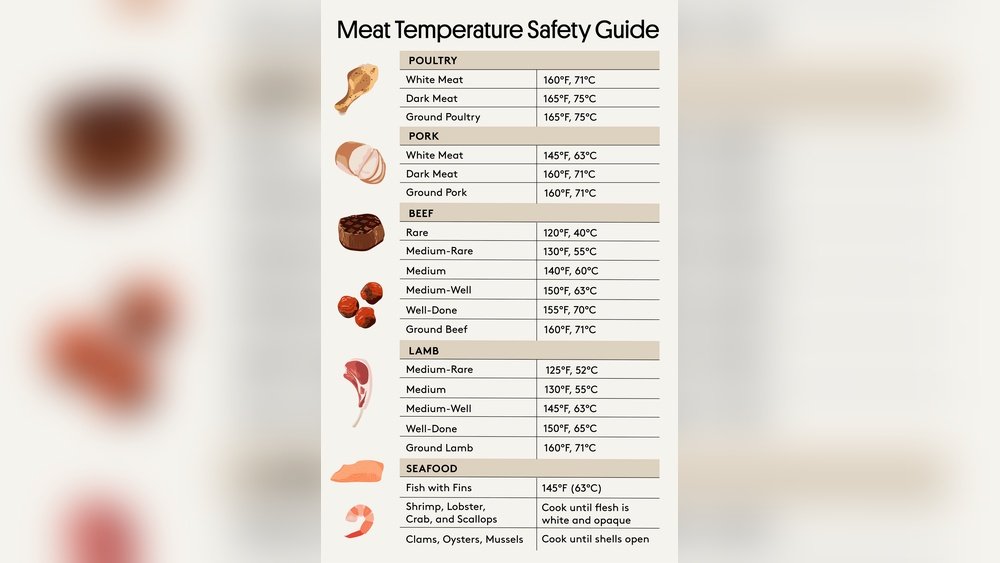
Safety is most important. Smoking times are only guides. Always use a thermometer.
Safe Temperatures
- Beef, pork, lamb: 145°F minimum (200°F for tenderness)
- Chicken, turkey: 165°F minimum
- Fish: 145°F minimum
- Sausages: 160°F minimum
Smoking times may vary. Internal temperature is the only safe way to check.
—
Smoking Times For Different Cuts And Sizes
Cut size changes smoking time. Thicker cuts need longer.
| Cut | Weight | Smoking Time | Internal Temp |
|---|---|---|---|
| Brisket | 10 lbs | 12 hours | 200°F |
| Brisket | 5 lbs | 8 hours | 200°F |
| Pork Shoulder | 10 lbs | 11 hours | 200°F |
| Pork Shoulder | 5 lbs | 7 hours | 200°F |
Use weight and thickness to plan smoking times. Always check internal temp.
—

Credit: www.smokedbbqsource.com
Smoking Times For Competition Barbecue
Competition BBQ is strict about timing. Judges want tender, juicy, flavorful meat.
Competition Tips
- Use “3-2-1” method for ribs: 3 hours smoke, 2 hours wrapped, 1 hour with sauce.
- Brisket: 12–14 hours, wrap after 6 hours.
- Chicken: 2–3 hours, use mild wood.
Competitions often have time limits. Practice at home to hit perfect timing.
—
Smoking Times For Different Cultures
Smoking is popular worldwide. Each culture has its own timing.
American Bbq
- Long smoking times, low heat.
- Brisket, ribs, pork shoulder.
Nordic Smoking
- Short, cold smoking for fish.
- Salmon, herring, trout.
Asian Smoking
- Tea-smoked duck: 1–2 hours.
- Fish and poultry smoked for short times.
Knowing cultural smoking times helps you try new recipes.
—
How To Reduce Smoking Times Without Losing Quality
You can shorten smoking times by:
- Using higher temperature (up to 275°F)
- Wrapping meat in foil (“Texas Crutch”)
- Cutting meat into smaller pieces
- Using strong woods for faster flavor
But never rush. Quality comes from patience.
—
How To Increase Smoke Flavor Without Longer Smoking
If you want more smoke taste, try:
- Using stronger woods (hickory, mesquite)
- Adding more wood chips early
- Smoking at lower temperature
- Spritzing meat with apple juice or vinegar
Smoking longer is not always better. Too much time can ruin food.
—
Smoking Times For Dry Rubs, Marinades, And Sauces
Seasoning changes smoking time and flavor.
Dry Rubs
- Use before smoking.
- No change in time, but adds crust.
Marinades
- Marinate overnight.
- May reduce smoking time slightly.
Sauces
- Add during last hour.
- Don’t add early or sauce will burn.
—
Smoking Times For Meal Prep And Leftovers
Smoking is great for meal prep. You can smoke meat ahead and reheat.
Reheating Smoked Meat
- Wrap in foil, heat at 225°F.
- Reheat brisket for 1 hour, ribs for 30 minutes.
- Don’t overheat or meat dries out.
—
Smoking Times For Different Age Groups
Some foods are better for kids or older adults.
- Kids: Chicken, sausages, fish (short smoking times)
- Older adults: Tender cuts like brisket, pork shoulder (long smoking times)
Avoid bitter, strong smoke for sensitive taste.
—
Smoking Times For Beginners Vs Experts
Beginners should follow recommended times and check temperature.
Experts can adjust times, use advanced methods, and experiment.
Insight: Experts often use “stall” and “crutch” to get perfect tenderness. Beginners should focus on safety and flavor.
—
Smoking Times: Common Myths
Many people believe:
- “Longer smoking always tastes better.” False: Too long can make food bitter.
- “More smoke is always good.” False: Too much smoke ruins taste.
- “You can judge doneness by color.” False: Always use a thermometer.
Understanding these myths helps improve your smoking.
—
Smoking Times For Health
Smoking adds flavor, but also changes nutrition.
- Long smoking can reduce fat in meat.
- Smoking vegetables keeps vitamins.
- Don’t eat burnt food—can be unhealthy.
Use safe woods and avoid over-smoking.
—
Smoking Times For Holidays And Special Days
Big events need careful timing.
- Thanksgiving turkey: Start 8 hours before dinner.
- Christmas brisket: Start 12 hours ahead.
- Summer BBQ: Plan all dishes with correct times.
Planning ahead avoids stress.
—
Smoking Times For Large Groups
Smoking for many people means more meat and longer times.
- Large briskets: 14 hours
- Multiple chickens: 5–6 hours
- Side dishes: 1–2 hours
Always use two smokers or stagger start times.
—
Smoking Times For Small Batches
Small batches cook faster.
- Small brisket: 8 hours
- Chicken wings: 1.5 hours
- Fish fillets: 1 hour
Don’t over-smoke small pieces. Use mild wood.
—
Smoking Times For Outdoor And Indoor Smoking
Outdoor smokers may lose heat in wind or cold.
- Add 10–20% more time.
- Use wind blocks.
Indoor smokers (electric) are more consistent.
- Stick to recommended times.
—
Smoking Times For Different Fuel Types
Wood, charcoal, gas, or electric changes timing.
- Wood: Longer, deeper flavor.
- Charcoal: Medium time.
- Gas/electric: Faster, but milder taste.
Choose fuel based on your schedule and taste preference.
—
Smoking Times For Sides And Desserts
Sides and desserts can be smoked too.
- Smoked potatoes: 90 minutes at 225°F
- Smoked apples: 60 minutes at 225°F
- Smoked bread: 45 minutes at 225°F
Desserts need short smoking times. Too long can ruin flavor.
—
Smoking Times For Traveling And Camping
Portable smokers are smaller and cook faster.
- Small brisket: 6–8 hours
- Chicken thighs: 1.5 hours
- Fish: 1 hour
Travel smokers may need more attention to heat and time.
—
Smoking Times For Different Levels Of Smoke
You can control smoke level with time.
- Light smoke: 1–2 hours
- Medium smoke: 3–5 hours
- Heavy smoke: 6–12 hours
Experiment to find your favorite.
—
Smoking Times For Smoked Drinks
Yes, drinks can be smoked.
- Smoked cocktails: 2–5 minutes
- Smoked water/ice: 30 minutes
Short times add flavor without overpowering.
—
Smoking Times For Commercial And Restaurant Use
Restaurants use big smokers. Timing is strict.
- Brisket: 12–14 hours
- Ribs: 6 hours
- Chicken: 3 hours
Restaurants often smoke overnight for lunch service.
—

Credit: www.amazon.com
Frequently Asked Questions
How Do I Know When My Smoked Meat Is Done?
Always check internal temperature with a thermometer. Smoking times are guides, but temperature tells you if meat is safe and tender. For brisket and pork, aim for 195–205°F. For chicken, 165°F.
Can I Smoke Food For Too Long?
Yes. Smoking too long can dry out your food and make it bitter. Most meats don’t get more smoke flavor after 4–5 hours. After that, only texture changes.
What’s The Best Way To Shorten Smoking Time?
Use higher temperature (up to 275°F), cut meat into smaller pieces, or wrap in foil. But never rush. Quality comes from patience and the right temperature.
Do Different Woods Change Smoking Times?
Strong woods like hickory or mesquite give flavor faster, so you can smoke for shorter times. Mild woods like apple or cherry let you smoke longer without bitterness.
Is Cold Smoking Safe For All Foods?
No. Cold smoking is safe for cheese, nuts, and fish, but not for meat unless cured. Always check safety guidelines. For more on food safety, see USDA Food Safety.
—
Smoking times matter more than many people think. The right timing gives you flavor, tenderness, and safety. Whether you are new or experienced, always plan, check temperature, and be patient. With practice, you’ll master the art of smoking and impress everyone with your food.
Remember, great barbecue is not just about heat or wood—it’s about the clock.